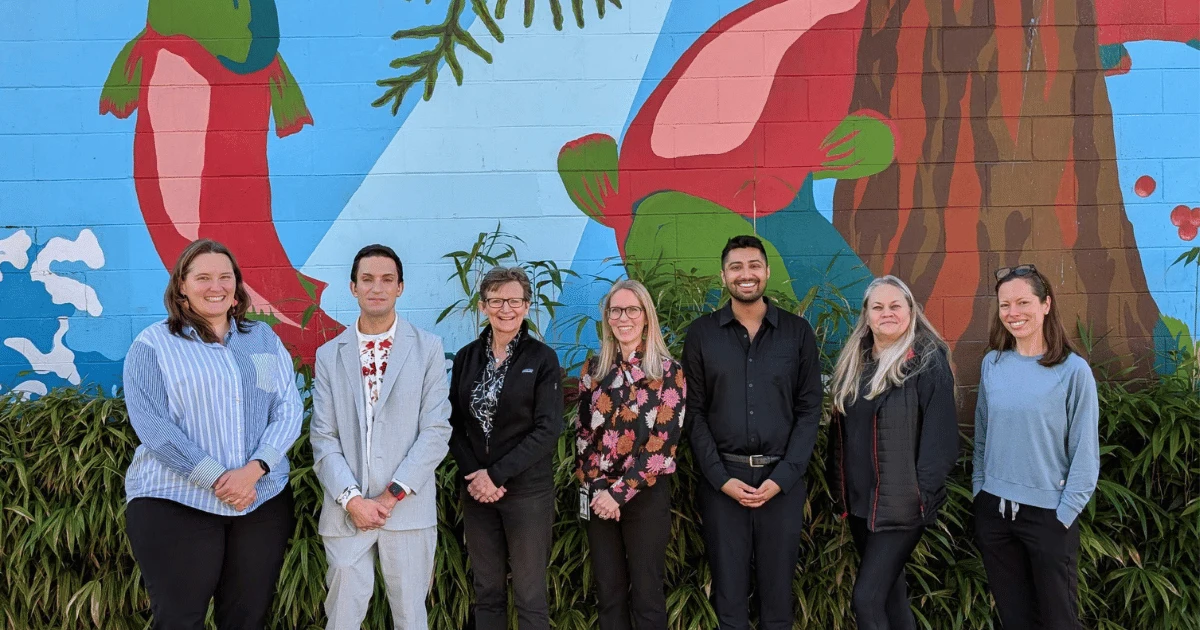

There’s been a lot of talk in the news about this year’s influenza season. Collaborating with our partners in public health, we are here to share the most accurate information to keep your families and loved ones safe. One of our incredible partners is BCCDC’s Dr Danuta Skowronski, recognized for her notable contributions to the public health responses around several major health events such as SARS, avian influenza, the 2009 H1N1 pandemic, COVID-19 and enterovirus D68, and for providing regular expert guidance around seasonal influenza.
While influenza seasons are notoriously difficult to predict, Dr Skowronski has given us all the latest information about the 2025-2026 influenza season. This includes a new variant of influenza A(H3N2) called subclade K and what we can do to keep our communities safe, and in the know.
Looking to the South for Clues about the Flu Season
Although many factors are involved when trying to understand how the Northern Hemisphere’s influenza season may play out, researchers consider which viruses have emerged during the Southern Hemisphere’s preceding season. This year during the Southern Hemisphere’s 2025 influenza season, the subclade K variant arose, and is projected to dominate during the Northern Hemisphere’s 25/26 season. For the 25/26 season in Northern America, the World Health Organization (WHO) had already chosen the vaccine, and this choice does not reflect the more recent subclade K variant, making the vaccine ‘mismatched.’
What does this mean? If vaccines are mismatched, they may not be as effective. Additionally, H3N2 epidemics are normally associated with worse influenza seasons, and vaccine effectiveness is typically lower for H3N2. Mismatched vaccines still provide some protection, especially from severe cases of influenza that require hospitalization. But, if the vaccine is less effective, subclade K may result in more severe events overall.
It is important to note that the influenza vaccine targets three influenza strains, including A(H1N1), influenza B, and influenza A(H3N2). Ultimately, despite the H3N2 mismatch, it is still important for people to receive their influenza vaccine, because it does still offer some protection. This is especially important for people at high risk, like older adults, or people with chronic medical conditions.
Surveillance is Key
The USA normally provides Canada with strong indicators about what the North American influenza season will look like, but the US Centers for Disease Control paused its standard weekly respiratory illness reporting as we entered the 25/26 season (although reporting has resumed now in the US). Dr Skowronski and her team continually monitored developments throughout the summer and early fall, enabling them to be among the first to alert about subclade K. The team also tracked data from the United Kingdom (UK) and Japan where the influenza season got off to an early and intense start — especially affecting children — with the H3N2 subclade K comprising 90% of flu samples. As of December 5, surveillance indicators show the seasonal influenza epidemic has also begun in Canada and BC, with a sharp rise in influenza activity over the past few weeks.
The Importance of Vaccine Effectiveness Monitoring
The influenza vaccine is still expected to provide cross-protection against mismatched variants. Knowing how much protection, however, requires real time measurement. Dr Skowronski’s Canadian Sentinel Practitioner Surveillance Network (SPSN) for Influenza Virus and Vaccine Effectiveness (VE) Monitoring (an initiative the Foundation is proud to support) is crucial to determine how much protection influenza vaccines provide each year. This enhanced molecular and epidemiological surveillance is used to address gaps in knowledge on vaccine-virus relatedness and will provide valid and timely VE findings, to inform further communications and public health guidance. Ultimately, this information will arm public health leaders to mitigate the impact of influenza this season, and will help improve understanding about influenza vaccines and programs in the future.
Staying Healthy during this Influenza Season
The vaccine remains the most important way to protect yourself, your friends, and family from influenza.
In addition, you can reduce the risk of getting and spreading the flu by:
- Staying home when sick, especially if symptoms include fever, cough and/or sneezing
- Wearing a well-fitting respirator or mask if you have symptoms and must be around others, in a public setting, or seeking medical care
- Washing your hands often with soap and water for at least 20 seconds
- If you can’t wash your hands, use a hand sanitizer containing at least 60% alcohol and rub your hands together for 20 seconds or until dry
- Coughing and sneezing into a tissue or your elbow instead of your hand
- Avoiding touching your eyes, nose or mouth with unclean hands
- Cleaning and disinfecting surfaces and objects regularly that are often touched by others
We hope this information will help keep communities in our province, and beyond, healthy during this holiday season. To register yourself or someone else for a flu vaccine, book online or by phone through BC’s “Get Vaccinated” program.
—————————————————————————————————
Vaccine effectiveness research directly impacts the health and wellness of our communities. Please donate to support vital work like this.
DONATE