What is Public Health?
We often hear from public health practitioners that public health is invisible… When it’s working. It is always diligently operating behind the scenes, in research, policy, regulations, and programs that keep our communities safe. It is the foundation on which good health is achieved.
What is Public Health? Public Health is Invisible… When it’s Working
We interviewed several proud public health practitioners and experts, and what we heard time and time again was that no one knows public health exists when it’s working well. Take, for example, our drinking water. When we wake up in the morning, wash our hands and brush our teeth, we don’t think about the engineers, scientists, and infrastructure needed to maintain our water system and ensure we have access to clean drinking water. When do we notice this essential service? When there is something broken in that system, and we are inconvenienced by living under a boil water advisory.
A Community Approach to Wellness
While public health work often goes unnoticed, under-appreciated, and importantly, under-funded, the work is essential. It is the foundation on which good health is achieved. Public health considers entire communities, not just individuals, when finding solutions to reduce premature death and minimize effects of diseases. Those who work in the field of public health are concerned with the well-being of everyone, and take a One Health approach, working with partners in fields such as the economy, environmental studies, and government, to ensure that well-being is promoted in all aspects of life.
And what’s more? It’s the most cost-effective means of healthcare. Preventing an illness, or injury, is always cheaper than paying for costly treatment downstream.
Innovation at Work
When you donate to public health, you are supporting innovation. In order to innovate, to find solutions to healthcare problems, we must invest in testing, trials of new treatments, and prevention measures. Wastewater testing for unregulated drugs is a great example of innovation that has the potential to help prevent opioid overdose deaths and keep our communities safer. Another is Test, Link, Call, a cost-effective and innovative approach to support access to care and treatment for people at risk of diseases such as Hepatitis B virus (HBV), Hepatitis C virus (HCV), human immunodeficiency virus (HIV), and syphilis.
Finding Public Health in the Everyday
Public Health is connection. It is meeting the needs of our communities. It is being equipped with what you need to make good decisions for your health. It is seatbelts, helmets, life jackets, vaccinations, shelter, mental health supports, food security, legislation to reduce collisions on roads, and anything else you can think of that ensures our communities continue to thrive going forward.
Our donors are investing in solutions, well before a health crisis takes hold. Taking an upstream approach, and doing the work that is needed to prevent serious illness and injury, will pay dividends by ensuring a healthier, safer, and more equitable future.


Letter from Our CEO
I joined Pacific Public Health Foundation as the Chief Executive Officer this past summer, taking over the reins from our Chief Operating Officer, Matthew Wright, who so graciously stepped in to support the team before I was brought on. This role has been an exciting new venture, bringing with it a lot of learning. Public health is vast, and I’ve been spending time learning about BC’s public health system, and the role the Foundation plays in funding important public health initiatives.
What I’ve learned is that public health is invisible in many ways, but it is always working behind the scenes to keep our communities protected from illness and injury. It has been fascinating to learn that a large proportion of the increase in average lifespan in BC (i.e., average life expectancy increasing by 25 years – to 82.4 years – from 1900 to 2020) can be attributed to advances in public health, including immunization coverage rates, safer food and water, prevention and control of infectious diseases, improved maternal and infant health and other interventions.
Public health is the foundation of all of our lives, and our donors alongside government and non-government funding partners make good health possible in many ways.
Youth mental health has suffered greatly in the last few years, particularly after COVID-19. That’s why we fund grants across the province to improve youth resiliency, mental wellness and belonging. New parents are navigating vaccine protocols for their children in a time of much misinformation, so we support vaccine effectiveness research through our partners at the BC Centre for Disease Control, to keep our communities protected, and to build and maintain public trust.
As BC’s population ages, we support programs that study ways to help reduce the risk of falling in the elderly. Parents need help providing supplemental healthcare for their children in this time of economic uncertainty, so we provide vision exams and free glasses for children in Okanagan schools.
British Columbians from equity-deserving populations continue to struggle accessing care, so we support our partners at Kílala Lelum, an Indigenous-led wellness hub in Vancouver’s Downtown Eastside, and programs like Test Link Call provide access to care for those at risk of, or diagnosed with Sexually Transmitted and Blood-Borne Infections (STBBI) like hepatitis B and C.
I’ve learned that public health is all these things and so much more, and I am proud to lead an organization of passionate individuals that champion public health as a cause.
All this is possible due to our supporters, partners, and under the guidance of our dedicated Board of Directors, to create immediate and measurable health impacts that are felt in all corners of our beautiful province.
I hope as you read through the stories in this report, that you gain a greater understanding of the importance and impact of public health programs on the health of our communities, as I have in the past few months. A rising tide lifts all boats, and by investing in public health, our supporters are investing in healthier communities overall.
I look forward to meeting existing donors and partners, and bringing onboard a new wave of supporters to contribute to the ever-increasing public health needs of our province. My work as CEO has just begun, and with the wonderful team we already have in place, I know we will achieve great things, and change the public health landscape in BC for the better.
Warm regards,
Shellina Lakhdhir, CFRE, EMBA (Candidate) CEO
Letter from Our Board Chair
2024–2025 was another productive year for the Foundation as we moved to the third year of our strategic plan. The organization underwent some internal shifts, with the addition of a new CEO, Shellina Lakhdhir, and welcoming new staff members. The (now more robust) team continues to work towards our purpose of a healthier, safer, and more equitable future for everyone in BC.
The Foundation advanced key partnerships, including one with Michael Smith Health Research BC, British Columbia’s research agency. Through this partnership, we are jointly funding public health research projects that demonstrate impact, especially with Indigenous communities and in rural and remote areas, making improvements to population health outcomes.
As part of our commitment to raise the profile of public health, the team successfully launched a knowledge translation video series, “Public Health Is…”, interviewing experts from all areas of public health about the public health system and how it impacts individuals and communities across BC. This content includes awareness building around the invisible nature of public health work, happening behind the scenes of our everyday lives. We’ve seen growing interest in these public health concepts and have leveraged that in our other areas of work.
The Foundation supported over 33 projects in 2024–2025 that spanned a number of public health areas like disease prevention, youth mental health, pandemic recovery, and public health innovation. Here are just a few project highlights: the SPEAK 3 survey helped us better understand British Columbians’ general health status and wellbeing and will help us identify opportunities for continued post-pandemic recovery. The Hepatitis B Roadmap is going to create a comprehensive plan to eliminate viral hepatitis in BC by 2030, helping Canada meet the UN’s goal of global elimination. The Ministry of Health foodborne illness project helped to determine why salmonella cases were rising nationwide, leading to a change in national food policy. The grants we provided of up to $50,000 to schools, school districts, parent advisory councils, youth-led groups, and other youth-centered organizations on Vancouver Island are helping to improve youth mental health wellbeing and resiliency; and the asthma research — that found a link between unnecessary antibiotic exposure during infancy and asthma in infants — will help contribute to the global reversal of asthma and allergic disease.
We could not continue to support projects like these, that have measurable impacts on public health in the province, without the support of our donors and partners. Going forward, the Foundation will continue to champion public health as a cause and make public health concepts accessible. With new leadership at the helm, we look forward to accomplishing even more in the future.
Douglas Nelson, Board Chair

Priorities in Public Health
The team at Doris Fox Lelum share about why this space is so special and how they built the space, programs, and services in partnership with their members and community.
Working Upstream
What if we could prevent illnesses and injuries before they occur? That perspective on public health solutions is known as “working upstream,” preventing health problems at the source. The concept of working upstream has become a key analogy for how we must think about health—it encourages a focus on prevention, health promotion, protecting people, creating environments that foster good health, and importantly, addressing social injustice, inequities, and the determinants of health. From building trust with Indigenous Peoples, to addressing the negative impacts of the climate crisis on equity-deserving populations, and making our roads safer, thinking upstream is fundamental to our work.
Here are just a few examples of our upstream-centred initiatives:
Vaccines are a great example of upstream public health interventions — providing protection before an illness or disease takes place, not only preventing human suffering, but allowing for significant cost savings to the healthcare system by preventing costly hospitalizations and treatment. Vaccines are safe and effective. We know this because they are continually monitored, not only to maintain the public trust, but to ensure that we are all armed with the evidence-based information needed to make informed choices about our health.
We proudly fund vaccine effectiveness research, led by the BCCDC’s Dr Danuta Skowronski, that informs influenza, COVID-19 and/or Respiratory Syncytial Virus (RSV) immunization programs in BC. This continued research and monitoring has resulted in many significant milestones, including COVID-19 vaccine dosing and duration recommendations, and seasonal influenza vaccine effectiveness research conducted each year that is submitted to the World Health Organization (WHO) by Dr Skowronski’s team, alongside 25 other countries as part of the Global Influenza Vaccine Effectiveness (GIVE) network, to inform vaccine strain selection for the coming 2025-2026 season.
Hepatitis C Virus (HCV) remains one of the most serious infectious diseases in Canada, responsible for more life-years lost than any other infectious disease. Despite the availability of highly effective treatment — with over 95% of those who complete therapy being cured —approximately 18,000 people in BC are living with untreated HCV. Without treatment, 30% of chronic HCV cases will develop cirrhosis, and 10% of these will progress to end-stage liver disease or liver cancer. Without treatment, many people with chronic HBV or HCV infection will end up needing a costly liver transplant, or lose their life while waiting for one.
This is why the Foundation has taken a leadership role in funding crucial work that aims to eliminate Hepatitis B virus (HBV) and Hepatitis C virus (HCV) as public health threats in Canada by 2030 — a commitment made as part of the WHO’s World Health Assembly in 2016. The Global Viral Hepatitis Strategy (2022-2030) recently renewed this commitment for 194 member states, including Canada.
The BC Viral Hepatitis Elimination Roadmap consultation is being led by Dr Sofia Bartlett, Interim Scientific Director of Clinical Prevention Services at the BCCDC, and Deb Schmitz, Executive Director of the BC Hepatitis Network, with funding support from the BC Ministry of Health, the Canadian Network on Hepatitis C, and the Foundation. Together, they are conducting a series of province-wide consultations and engagements, including those with lived experience, community organizations, healthcare providers, academics, advocates, and Indigenous groups, to identify what is needed to move toward a BC free from viral hepatitis.
Understanding the Health and Well-Being of Communities across BC
Over the last few years, we have been so proud to fund — with the support of our donors — the vital British Columbia Surveys on Population Experiences, Action, and Knowledge (SPEAK), to support the research into the impacts of the pandemic, so we are better equipped to help our communities in the event of another public health emergency.
Explore the key findings from SPEAK 3

Improving Access to Care
Access to HIV, hepatitis, and syphilis care: how cell phones and peer support are changing lives for people who experience criminalization.
Read more about Test, Link, CallSocietal Consequences of the Pandemic
Supporting Indigenous Representation in STEM Fields
Read More
Collaboration and partnership can transform the health of individuals and communities. To expand collaborative opportunities, the Foundation partnered with Island Health to provide youth resilience grants to launch new and innovative projects/programs in communities across the Island Health region.
These grants provide the opportunity for schools, school districts, parent advisory councils, youth-led groups, and other youth-centered organizations to apply for one-time funding to improve resilience among youth up to age 19. Grants were awarded to organizations who emphasized connections to one or more stable and supporting adults, belonging to a broadly defined family, community or school, connection to culture, sense of autonomy, competence, purpose, or social and emotional learning and skills.
Examples of grant recipients include:
- Lifeguard courses in Tofino and the surrounding areas
- Teen art programming in Nanaimo
- Cultivating growth and resilience in newcomer youth
- Youth grief support
As we saw from the results of the SPEAK surveys, the mental health of British Columbians has suffered since the pandemic. But how can we improve mental health in our communities if the doctors who provide mental health support are also suffering? This is why we chose to fund a program that takes an upstream approach to mental health support for physicians in our province.
The PHPM Peer Support Program provides confidential, non-clinical emotional support to Public Health and Preventive Medicine physicians in BC. This initiative responds to a longstanding gap in support for PHPM physicians, who often work in isolated roles without access to the structures and funding available to facility-based medical staff. These physicians regularly manage public health emergencies and complex system-level issues, which can result in high levels of occupational stress.
The PHPM Peer Support Program matches physicians with trained peer supporters — colleagues who understand the unique pressures of PHPM work — for up to three 1:1 support sessions. It also fosters informal support and peer connection through training, regular meetings, newsletters, and conference outreach. This program promotes physician wellness through early support and prevention, rather than crisis response. It improves coping skills, reduces isolation, and builds a culture where seeking help is normalized. More than 80 PHPM physicians in BC have access to the program.
By investing in physician well-being, our donors are strengthening our broader public health system, ensuring physicians have the tools they need to stay healthy, in order to take care of others.
Acuitas Therapeutics
Donor Spotlight


Acuitas Therapeutics’ mission is to advance human health through innovation. We are very grateful to them for sponsoring the seed2STEM summer research program for Indigenous youth (Page 6). In the spirit of true partnership, they even invited the students on a tour of their lab, where they create best-in-class lipid nanoparticle (LNP) delivery systems. Their LNP technology enables the COVID-19 vaccine COMIRNATY®, which has protected billions of people in more than 180 countries worldwide, and was crucial in the delivery of COVID-19 vaccines during the pandemic. Their employees shared advice on STEM careers with the interns, telling them that not only can they be successful in their careers, but their work can also help solve real-world public health problems, like the need for vaccines for new and emerging illnesses.
Providing Indigenous students with the opportunity to experience what a career in STEM looks like is a powerful way to encourage diversity and inclusion in public health fields. Including those with a unique perspective and voice who will only make our public health system stronger. We thank Acuitas Therapeutics for encouraging these students to envision themselves as public health leaders of the future.
Michael Smith Health Research BC
Partner Spotlight
This year, we further enhanced our partnership with Michael Smith Health Research BC (Health Research BC), British Columbia’s research agency. Through this partnership, we are jointly funding public health projects that demonstrate impacts on practice, programs, service, decision-making, or policy, especially with Indigenous communities and/or in rural and remote areas, making improvements to population health outcomes. The goal of this work is to support research that improves health, and positively impacts the healthcare system. As part of this enhanced partnership, we co-funded select 2024 Convening & Collaborating Program(C2) grants, awarding grants to researchers, trainees and those who use research to engage with each other on priority themes such as population aging, climate change and health, the health human resources crisis, and public health emergencies. We also co-funded select 2024 Reach Program grants, awarding grants to researchers to help promote knowledge translation (KT) activities, allowing them to share their research evidence, “extending the reach” of their important work.
We are grateful to Health Research BC for their ongoing support and look forward to continuing to support the health research landscape in BC together!

Some Grant Recipients Include:
Co-creating a research roadmap for an innovative virtual health delivery model to recruit and retain health workforce in rural, remote, and Indigenous communities
Identifying research priorities to support the evaluation of “upstream” health promotion initiatives in British Columbia
“A Day in the Life of a Longhauler”: Using Photography as a Tool for Long COVID Awareness
From Social Media Advertisement to Type 2 Diabetes Remission: Harnessing Innovative Social Media Strategies to Make Remission Possible in British Columbia
Thank You to our Partners
Thank you to our partners across all areas of public health, who continue to offer advice and support to the Foundation. We know that strong partnerships create more reach and greater change, and your commitment to our purpose allows us to drive innovative research, practice, and policy solutions that have a real impact on communities in our province.
Meet our PartnersThank You to our Donors
Thank you to all the donors who thoughtfully support the Foundation. Your dedication to the health of communities across BC is the reason why we are able to champion such impactful public health initiatives. We hope you are proud of what your investment is doing — providing support to the many important projects you have read about here. You are changing and saving lives today, while helping to improve health and wellness for future generations. We are so grateful to you for your commitment to transforming public health.
Meet our DonorsThank You to our Board of Directors and Advisors
Thank you to all the donors who thoughtfully support the Foundation. Your dedication to the health of communities across BC is the reason why we are able to champion such impactful public health initiatives. We hope you are proud of what your investment is doing — providing support to the many important projects you have read about here. You are changing and saving lives today, while helping to improve health and wellness for future generations. We are so grateful to you for your commitment to transforming public health.
Meet our Board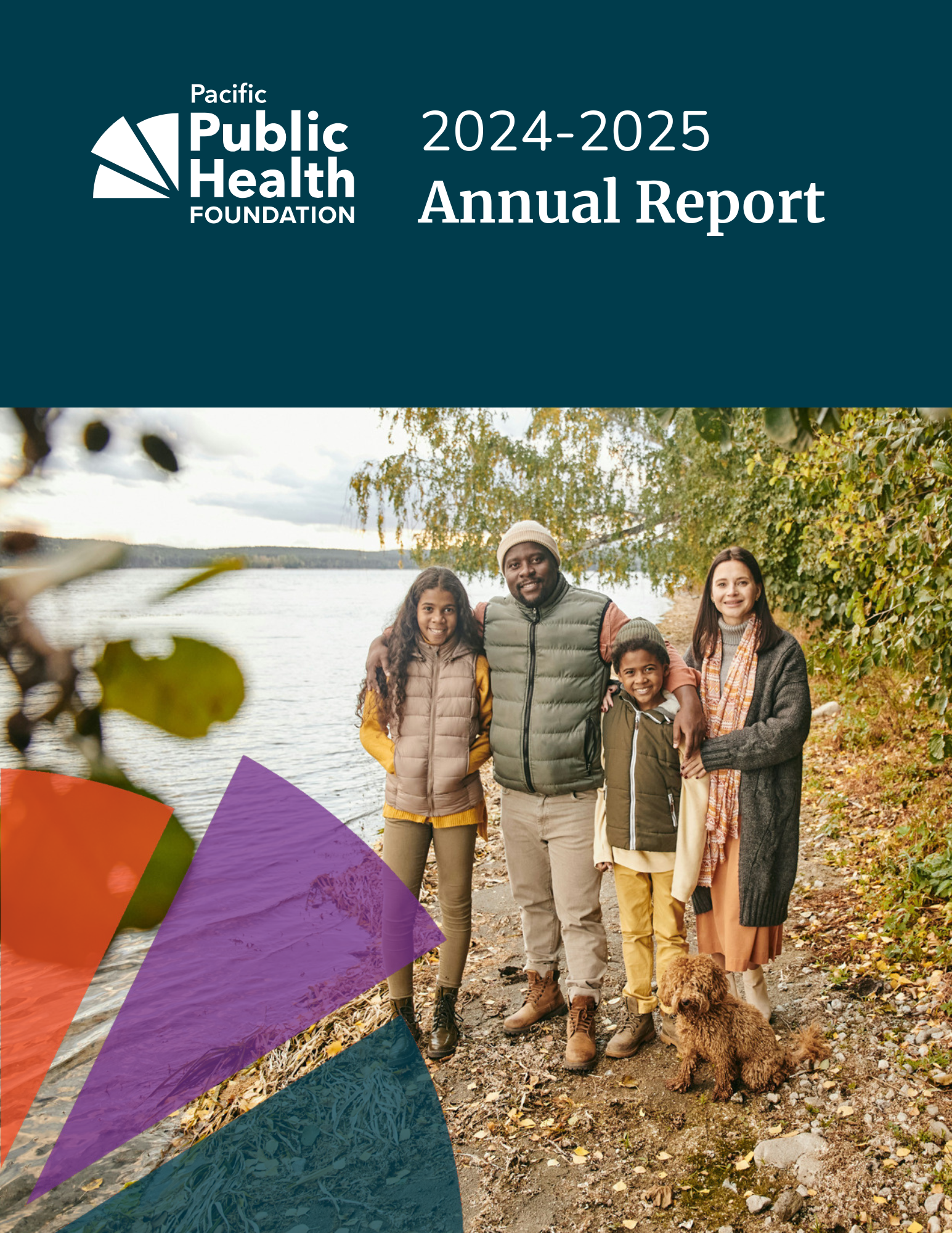
Annual Report
Each year, the Foundation continues to undergo strategic development and growth to elevate our mission to be a leader in public health philanthropy, engaging and investing in innovative, collaborative, and evidence-based initiatives that improve population health.
We invite you to read our annual reports and financial statements as we showcase our stories and successes.
View the report as a PDF:
2024-2025 Annual Report