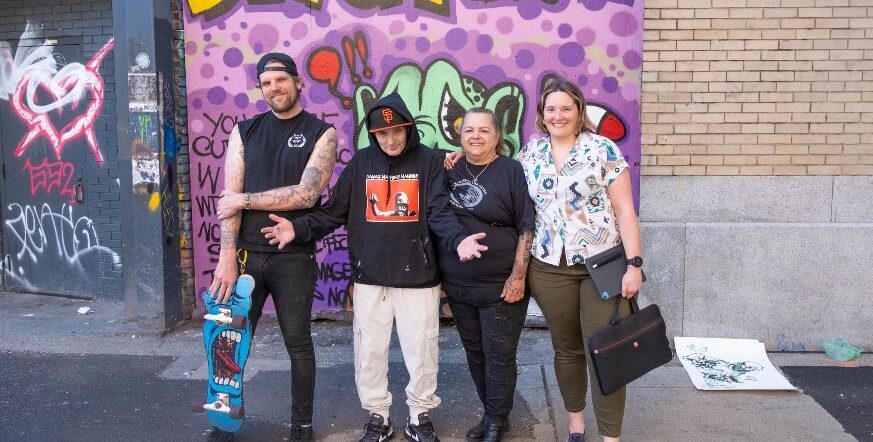

Although technology has changed the way teens today interact with the world, some themes of adolescence are universal, and have stood the test of time. We all remember feeling awkward, uncomfortable, and searching for our ‘people’. The people that would make us feel welcome, like we belonged, and help us through the challenges of growing up. Finding your people can be difficult for anyone, and in the Northern Health (NH) Authority region an overwhelming need was identified for child- and youth-focused mental wellness supports to address this. The Foundation partnered with NH to provide 11 grants for organizations in seven different communities, supporting youth programming, mental health education, and cultural engagement.
The Recipients
With 20 per cent of the population of NH identifying as Indigenous — the highest proportion in BC —grants were awarded to organizations like The Prince George Métis Society, who emphasized land-based learning, connecting students with Indigenous culture and nature. This cultural awareness is so important because of the history of Residential Schools, where Indigenous children were forcibly removed from their homes and denied access to their land, language, and culture. This generational trauma remains, and is even a part of the Truth and Reconciliation Commission’s Calls to Action, asking the federal government to develop, with Indigenous communities, culturally appropriate curricula.
Some grant recipients used the funds to enhance their programming to better serve youth mental wellness, like the South Peace Arts Society, who redefined their teaching philosophy to prioritize emotional well-being, fostering emotional resilience through art.
Other programs were there to provide essential programming for youth, like Houston Link to Learning, who delivered accessible mental health programming and nutrition support to vulnerable teens. Because of the grant provided, Houston Link to Learning was able to operate for the entire school year, instead of just 10 weeks, as it had previously run in early 2024.
What these programs all have in common is that they are giving youth that important sense of connection and belonging, and a safe space to express themselves.
The Importance of Knowing Someone Cares
Feedback from the participants showcase the impact of these programs:
“It means I get something to do instead of lay in bed it gives me a reason to leave the house. ” — Participant 1
“It means time with your friends and to have some fun and to be yourself. This drop-in is a place where you can get to know people better and find new interests. I hope this drop in happens next year.” — Participant 2
And importantly for teens, these programs gave them something near and dear to their hearts…Food!
“Talking and getting good advice. Being able to express myself. Snacks!!” — Participant 3
“Teen drop-in means a lot to me. It gives me the time to spend with my friends and so I can get to know more of others. I’m very thankful for the time and the plaza’s snacks, I love food. Thank you JJ and Ben for everything.” — Participant 4
Positive well-being in adolescence leads to healthier adulthood, and early-life interventions can promote better quality of life. Our youth are tomorrow’s leaders, who will advance social change and address crises such as toxic drug poisonings and the impacts of climate change. By offering our support now — through initiatives like grants given to youth organizations in the community — we are creating a healthier and more equitable future not only for our younger generations, but for us all. Supporting youth mental wellness is public health in action. Please join us in supporting this work by donating to the Foundation.
Donate